 Nestled in the foothills of central Chile’s coastal range of mountains lies a string of communities that house a portion of the farm laborers who work hard to supply the first world countries with specialty fruit, grown exclusively for exportation. The large farms stretch below for miles in the fertile valley. The roots of these farms (or haciendas) extend back in time to the colonial period, when a feudal system was firmly in place. Workers dedicated their lives to the “estate”. In turn, the “lord of the manor” cared for his workers, as a sort of “godfather” figure. Some cared well for their workers, and some were of the “cruel tyrant” variety……and so the story of the history of much of the rest of the world has also gone.
Over time, the large “estates” have turned into large fruit companies. Along the way, some of the workers received their own plots of land upon which to build their little houses in different communities, bordering the farms. Some even received enough land to have their own animals and gardens; and some didn’t. Now the people from these communities work hard for the fruit companies and are paid as farm laborers. Some are paid fairly for the long hours of work they put in; others are not.
Rinconada de Parral is one of those little communities hidden away among the foothills. It has a population of 2,000, but it has no stores. Some people have converted part of their house into little shops where neighbors can purchase “the basics”: bread, milk, coffee, tea, luncheon meats, cheese spread, soft drinks, cookies, and candy. There is a school for 180 children. The teachers come to teach at the school from other, mostly larger towns in the area. There is no bank, no pharmacy, no doctors (there is a little health center which gives out government milk for babies and toddlers, vaccinations, and simple medical procedures on a 9 am to 5 pm basis several days a week. There are several buses that go through the village per day.
In many of the families in Rinconada de Parral both the mother and father work as laborers on the farms below. A bus comes to pick them up at 5:30 am and then delivers them back home around 6 pm (depending on the work load, it could be later). However, as with all farm labor, there is a season for work and when that season is over, there is no work…..which usually occurs during the three months of winter. Then belts must tighten, as money gets scarce, or work must be found in other areas of the country.
Some of the children, whose parents work, are fortunate enough to have a kind neighbor (or perhaps a relative) to look after them while their parents are gone – many don’t. That means they wake up alone (or the oldest children is responsible for the siblings) to get up, dressed, and off to school. After school, they’re alone until the parents finally get home. After working long, hard shifts on the farm, the parents usually just want to “crash” into bed so they’ll be able to “crawl out” again early the next morning. It’s not hard to imagine what a lonely and “uncared for” life a lot of those children face. Well, in these communities there’s another factor which plays into the picture of the children’s lives. Last year there was a major earthquake which destroyed 50 of the 520 homes in Rinconada de Parral (more or less the same picture in the other Rinconadas). Not only do children have to spend much of their time alone, they have to do so with the fear that another earthquake or some other disaster will come and they’ll have to face it all alone! That’s a pretty scary thought for a child.
There are other factors which play into the lives of the children in Rinconada de Parral. Because of the isolation, general lack of education, and the type of work done, life has closed in on itself in the community. Many of the children in the community have no motivation to continue with their studies after grade school, nor do they have dreams of doing something with their lives, besides drifting into being farm laborers. Many of the parents are un-educated themselves. There are a number of young people (especially girls) who have never been out of the community (except perhaps to the closest small town, which has a few stores, a bank, a small supermarket, etc., a health clinic with emergency service).
Most of the residents are related to each other. Many of the girls get pregnant at a very young age –many times to relatives (some at 11 and 12 years old). To relieve the stress and pressures of life, there are many extra – marital affairs and a high consumption of alcohol and drugs. Some of the teachers reported that they had children come to school very hungry on Mondays because on Sundays they only ate tea and bread all day because their moms were too tired to cook (and many times the dads were gone or sleeping).
One of the teachers told the heart-wrenching story of a 10 yr. old boy in her class. She had gone to a lot of extra work and expense in order for her class to make “photo calendars” for each of the moms for Mother’s Day. She was quite excited about the project. When finished, she instructed the children to take them home and give them as special gifts to their mothers. After class, one boy waited until the others had left. He shyly approached her with his calendar and said: “This is for you. You’re my ‘mommy’ in the school”. The teacher was caught off guard by such a gesture and insisted that the little boy take the calendar to his ‘mommy at home’. The little boy turned sadly away and slowly shuffled out of the classroom. However the teacher couldn’t help feeling anxious and uneasy about what had just transpired. In the next few days, she began to investigate the situation at the student’s home. She discovered that a year ago, the boy’s mother had left the community with her “lover” and the children she had had with him, leaving this little boy (who was from the original father) with his two older brothers (who were also from the same father). One of the brothers was 20 years old and the other 22 yrs. old. The father had abandoned the home some time ago. The brothers both worked as farm laborers, and partied on weekends – leaving their little brother ‘on his own’, except for providing basic food to survive on, paying the bills, etc. The teacher felt terrible once she understood the whole situation. The next Monday, she approached the boy, after class, even though it was past Mother’s Day and told him that she’d like very much to be his “mommy in school” and receive the gift. With tears in his eyes, the boy explained that he had thrown the calendar away that day, after school, because he had felt that he had no mommy at all. The teacher was by now crying also. She hugged him and said, “Yes, you do, I’m your ‘mommy in school’”. Inside, however, she still felt anxious, as she thought; “Will he still have a ‘school mommy’ next year?…..not all teachers are the same.
One day Project “Corazones Valientes” showed up in Rinconada de Parral. Through the enthusiastic cooperation of the teachers, the project started off with a questionnaire to be answered by the students. The questionnaire listed 16 questions, which indicated symptoms of post-earthquake trauma; presented in a simple ‘yes’ or ‘no’ format. In some of the classes, the teachers mentioned that the questionnaire led to an eye opening discussion among the children about just how frightened and alone many of them felt.
The next step was reviewing the questionnaires with the teachers to determine which of the children would most benefit from the workshops. The group was distributed into several workshops, small enough to be “close-up and personal”.
Margaret Galarce, a child psychologist with a lot of love and understanding of children, came to give the workshops, which included: “Practical Emotional Intelligence Training Activities”, as well as “Life Skills Training”. Through an interesting repertoire of audio – visual and interactive activities, the recurring theme was: “Yes, we can control our impulses. Our emotions are an important part of us, but we must learn to control them.”… and “ Yes, it’s natural to feel afraid, but most of the time fear is just a great big, growling dog – without teeth!” .
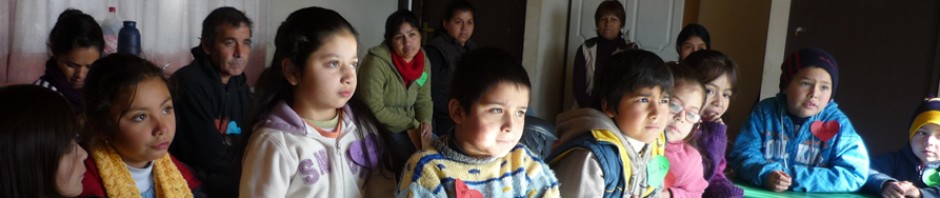
Not only were the children able to take advantage of the training, but the parents who came, were just as interested and participated along with their children in the activities.
After the final Saturday of workshops, we hosted an afternoon of arts and crafts activities, related to the themes, along with a picnic fellowship to get to know the parents better. They expressed interest in having more such workshops, both for themselves and for their children.
The “gran finale” was a simple graduation ceremony, in which each of the children who participated received a diploma. This was indeed a special event for children who have never received recognition, much less a diploma! Photos were taken of each child receiving their diploma to give as a motivation for them to continue with their education.

 tamingfears.com