A Challenge to Keep “Walking a Mile in Each Other’s Shoes”
 For those of you who are following the progress of “Sanando Corazones” with a map, we are now in the area of Curanipe, at the bottom end of Chile’s 7th region. The devastated areas include both the coastal towns and the rural communities in the interior.
After a teacher seminar I did on Wednesday in a school (a bit in the interior), a teacher came up to thank me for the personal encouragement he had received in the seminar; confiding in me that it had been quite difficult for him at first, knowing that several of the children in his class had watched as walls collapsed on their brothers and sisters, crushing them to death. Then he added something quite interesting, he said: “I think that with everything that happened in the earthquake/tsunami; and everything that is happening all around us up till now, we tend to just want to block it all out and get on with our lives. Thank you for reminding us that we don’t have to get dragged down by it all, yet each of us was put in this group called ‘humanity’ to encourage each other, help each other, love each other, to make the effort to ‘put ourselves in each other’s shoes’; and not separate ourselves off from each other. Thank you for reminding me about that.
Recently, Chile suffered the tragic deaths of 21 members of a team who were on a mission to continue helping with the re-construction of one of the many areas which still remain devastated and crippled by the earthquake and tsunami one and a half years ago.
In a world with so many dramatic events taking place, not much international attention was ever given to the event in such a long, slivery, country “down under”, with a comparatively minimal population compared to other recent disaster areas around the world. However, when one looks at the fact that the 2010 earthquake in Chile wreaked destruction over an area of 6 of the major regions of the country, it becomes probably the largest earthquake (area wise) in history. Official reports gave reports that 850,000 homes were destroyed, while other reports (from the field) gave 1million homes destroyed. Put that into human terms and you have 1 million Chilean families (fathers, mothers, children, and sometimes other additional relatives like grandparents thrown in) whose lives were also basically destroyed that fateful day! Yes, it was a very unpleasant event and some Chileans who were not directly affected would prefer to just forget about it and move on to more “progressive” aspects of life. However, those who lost everything that day cannot so easily “move on” with their lives. In many towns close to the epi-center of the quake, where engineers (both foreign and Chilean) arrived to do earthquake damage assessment to the buildings, the harsh reality is written clearly in bold letters (on some of the buildings themselves) – 90% of the buildings suffered damage and of that 90%, 70% was total destruction or major structural damage.
On the coastal areas, the tsunami swept away entire towns (thank God relatively few people were swept away because the majority escaped to higher ground, thanks to the rugged “Pacific terrain” geography of forested, mountain slopes along the coast.
The tsunamis which occurred, following the earthquake, totally “razed” fishing villages along the coast, as well as destroying large sections of coastal cities. That is not to say that the people disappeared (though I’m sure that in many cases they would have liked to). What was gone were their homes, their properties, their businesses, their sources of work, and they could not go anywhere but into temporary shelters (which initially were tents, then replaced by very basic wood slat huts, in some cases built by high school students who sacrificially offered to help out, even though they had zero building experience. The need was so great that anyone’s help was urgent, no matter how much skill or experience they had! It must be remembered that the earthquake/tsunami took place at the beginning of a long, cold, rainy mid-southern Chilean winter.
There are many people still living in temporary shelters, some still in refugee camps today, one and a half years later. In rural areas, some families are still living in the stronger parts of a house which was partially destroyed; some continue to live as refugees in homes of neighbors, friends, or family. The infrastructure of many communities in the devastated areas has still not gotten back in place. In some areas men have had to leave to other areas of the country looking for work and leaving their families to struggle alone under difficult living conditions.
Those were the realities that the team from “Let’s Raise up Chile” (Levantemos Chile) saw and committed their lives (to the death) to rectify and rebuild. The team of 21 chose not to forget, just concentrating on their own lives…..and they ended up giving their lives for those whom they had chosen not to forget.
Through this whole experience of their deaths and finally hearing (because of their deaths) just what that team had been doing to help out with re-construction throughout the devastated areas, I realized that it is important for people to know what we are doing with Project Sanando Corazones – before we die.
At the beginning of the school year in March of 2011, we began Project Sanando Corazones to reach out to the children who were directly affected by the earthquake/tsunami, visiting the areas along the coast, which were most affected by the earthquake/tsunami, and the interior areas, which were affected by the earthquake. Our goal is to pinpoint the areas where there is need of psycho-therapeutic help. We accomplish that goal with an evaluation, which contains diagnostic points. Consequently, the long term goal is to provide channels for programs of long term psycho-therapeutic help in areas which still need such help (hey out there; this would make a great study for your psychology graduate course thesis!).
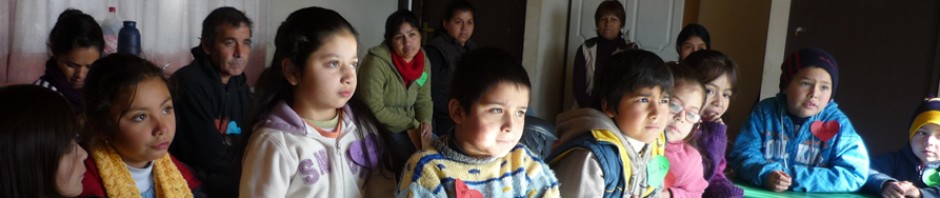
Our short term goals are to offer one day workshops for the children in very needy areas, which demonstrate to the children different “tools” they can use to help them constructively face the obstacles in their lives. These workshops are also a way of saying to these children: “We love you. We care about your well-being, and we are here for you”. The workshops are interactive, entertaining, and come with games and snacks. Each child receives a diploma for their participation. So far we have done 7 workshops in different areas and presented (then collected) the psycho-therapeutic evaluations in 14 schools.
Through visiting the schools, we have come to realize how much teachers also need encouragement and support. In some cases teachers lost everything, right along with their students; yet continue to put their own pain aside in order to pour out to the children day after day. So far we have given 7 teacher seminars, where we share materials authorized by UNICEF for long term psycho-therapeutic help which can be incorporated into a school curriculum. These seminars are also motivational seminars which reach out to give spiritual and emotional support to the teachers.
Needless to say, each step of the way, there has been the need to encourage adults and parents, letting them know that “someone is there for them too”.
The City of Oakland, CA has come out with a grass-roots disaster preparedness program on a community level. We have been able to share the “CORE” materials with community leaders, city fathers, teachers and school directors, fire departments, and libraries in communities along the way; hosting discussions and networking ideas for local emergency preparedness. That has come to a total of 30 sessions.
We are a little over the half way mark as far as covering the most affected areas. Everything we have managed to do so far, has been thanks to interested individuals who have contributed funds towards “Project Sanando Corazones” (Paypal acct. : tamingfears@gmail.com or personal deposits to Sharon Galambos, Wells Fargo checking acct:1101314125). By that I mean to say that this project belongs to each and every person who has contributed and each and every person who has helped out, in one way or another. It’s quite the team! Some day each one of us will finally realize just how far our sacrificial interest and help actually reached.

 tamingfears.com